

Bitumen coating mangrove and molluscs a couple days after the spill. Photo Credit: Tanya Murphy, Australian Marine Conservation Society
NOTE: This blog post will be continually updated.
We have received many messages and phone calls from concerned community members and local organisations regarding this spill. In this post, CAFNEC will provide context and a summary of actions taken.

ABC Far North article produced on 30th September 2025. It contains commentary from AMCS, CAFNEC, and JCU.
29th September 2025 – 2nd Oct 2025
On 29th September 2025, a bitumen and kersoene spill occurred in Smith’s Creek (Trinity Inlet). CAFNEC staff were made aware via The Cairns Post social media pages.
On 30th September 2025, CAFNEC was contacted contacted by ABC Far North to comment on the spill. CAFNEC Projects Officer, Shannon Bredeson, talked about the impact to mangrove health as the pollutants can: smother snorkel roots, damage fish nurseries, and poison mangrove crabs – if not cleaned up properly and quickly. Australian Marine Conservation Society (AMCS) and a marine biologist at James Cook University are also quoted in the article.
Boral self-reported the spill stating that it was due to a bund safety valve failure. As a result, 10,000L of kerosene and bitumen spilled into Smith’s Creek.
CAFNEC contacted Dr. Norman Duke, a mangrove ecologist with more than 40 years experience, to inform him of the spill.
On 2nd October 2025, Maritime Safety Queensland (MSQ) contacted CAFNEC to discuss our MangroveWatch program and opportunities for an existing program to provide long term monitoring in Trinity Inlet. They also confirmed they had been in touch with Dr. Duke and reading his papers.
However, support to MSQ was limited as they did not have funding to pay for Dr. Duke nor CAFNEC’s time.
3rd October 2025 – 8th October 2025
CAFNEC received many messages from community members and member groups, concerned about:
- poor water quality: especially for local organisations that use water from Trinity Inlet
- contaminating the Great Barrier Reef: boats with bitumen on their hulls were seen traveling to the Reef
- unhealthy wildlife: a pelican was reported covered in bitumen
- inadequate signage: people were seen fishing in contaminated waters. when appraoched, they were unaware of the health risk and spill
- slow response from DETSI: Despite reassurances that clean ups were happening, the community did not seen people out there cleaning it up
Community members are keen to see this cleaned up and want to do it themselves, but this poses a health risk due to kerosene and biutmen being toxic. This is DETSI and Boral’s responsibility.
AMCS and CAFNEC are scheduled to meet with DETSI to voice community concerns and gain clarity on DETSI’s decision to leave the bitumen on the rock wall and in mangroves. (see screenshot below).
See DETSI Cairns Bitumen Spill which is regularly updated to reflect DETSI’s reponse to this spill.
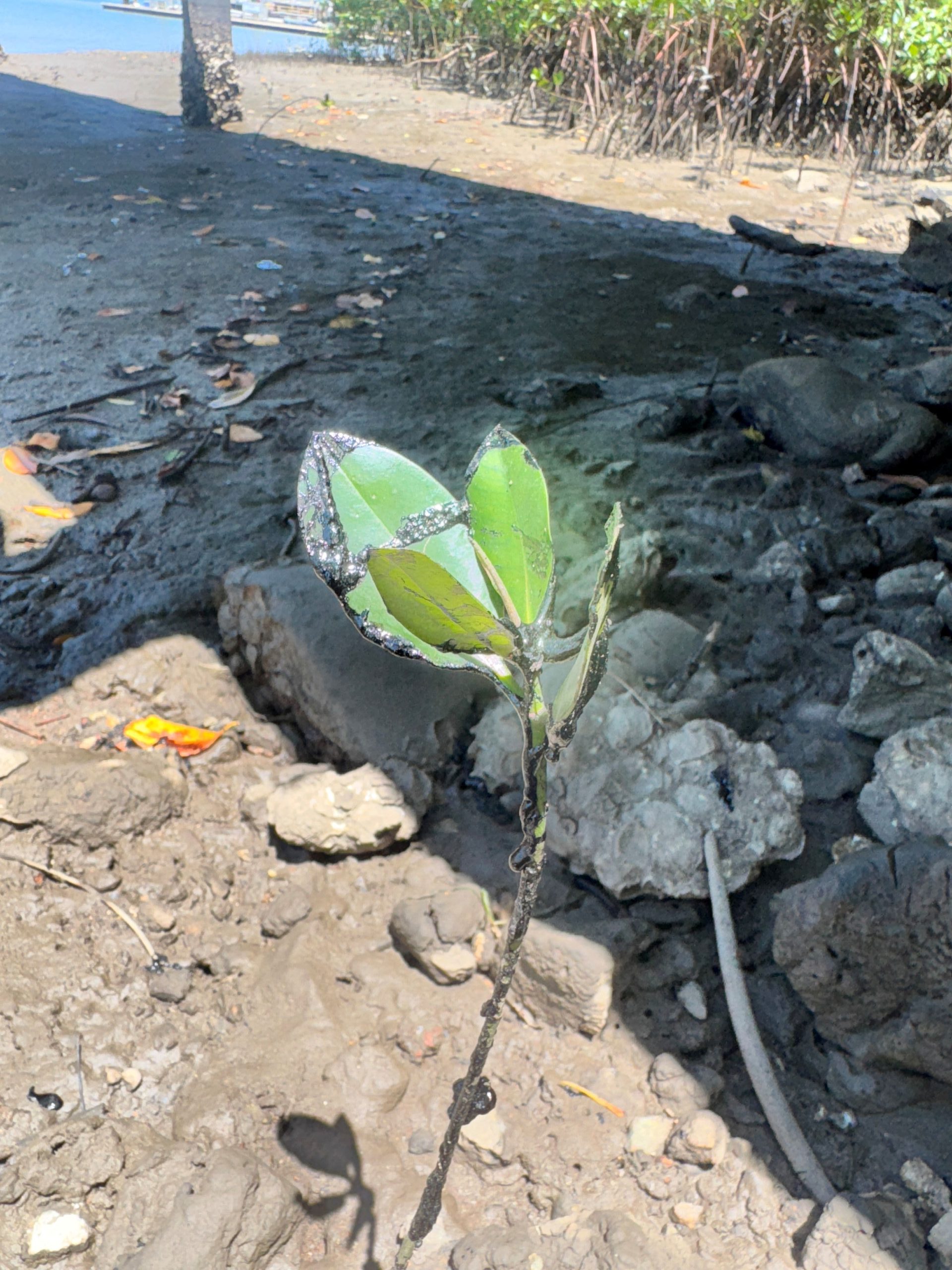
Bitumen coating leaves of a young mangrove sapling in Trinity Inlet. Photo Credit: Tanya Murphy, Australian Marine Conservation Society.
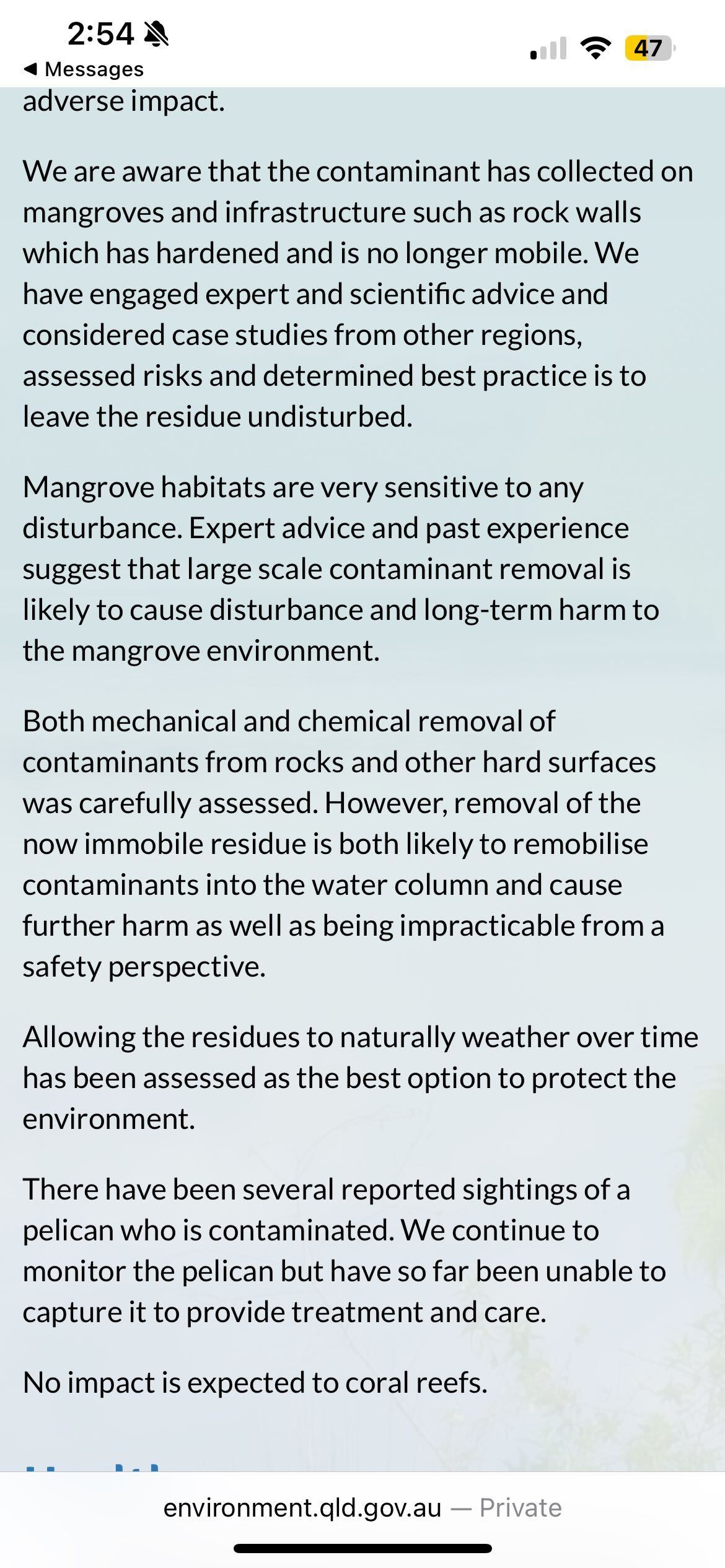
Screenshot from DETSI’s website stating that they will not be removing the residue from the rock wall nor the mangroves. Screenshot taken on 8th October at 3pm.
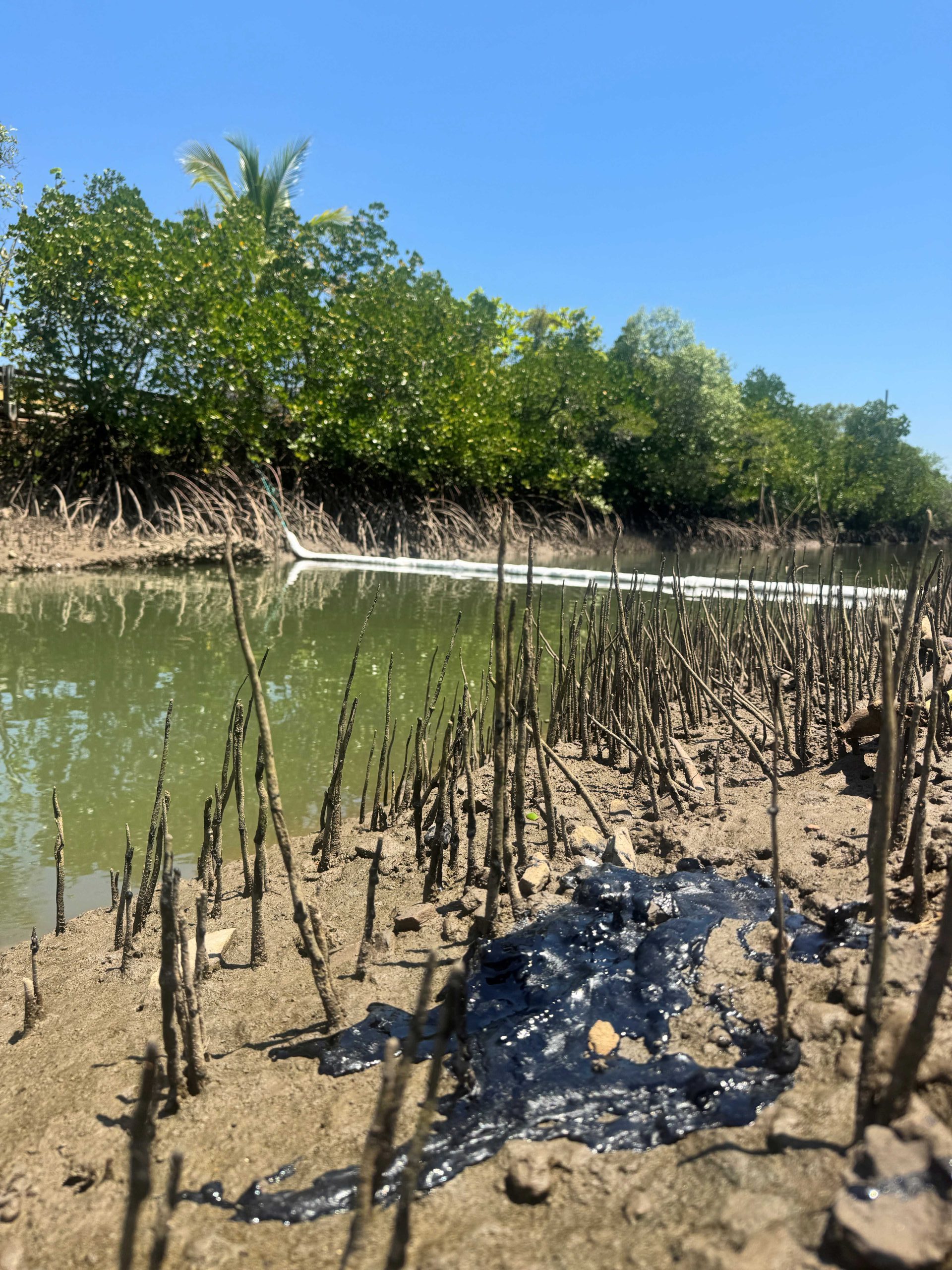
Bitumen sticking to mangrove snorkel roots in Trinity Inlet. Photo Credit: Tanya Murphy, Australian Marine Conservation Society.
This post will be updated regularly as new information comes in and decisions are made. Please check back here for the latest updates.

