by Liz Downey,
Wildlife Conservation Queensland – Hinchinbrook Branch
Photos contributed by Daryl Dickson.
This article was originally published in the June 2025 editon of Ecotone. Read the full edition here.
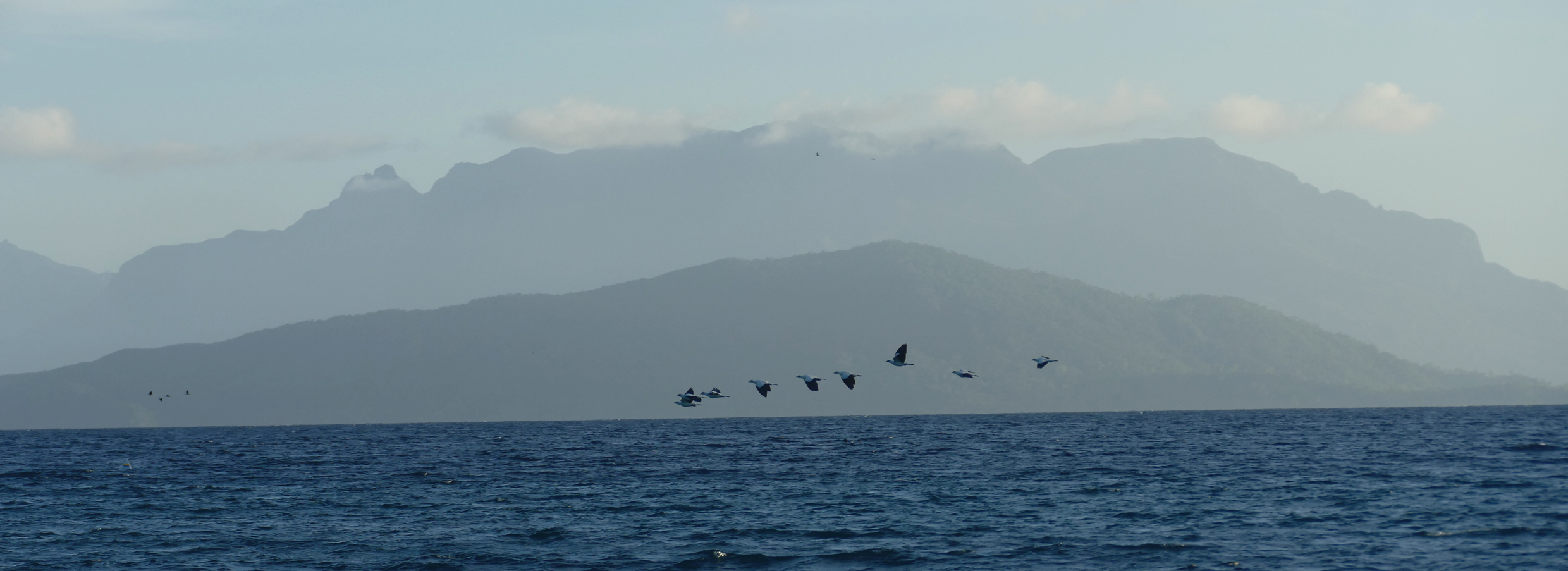
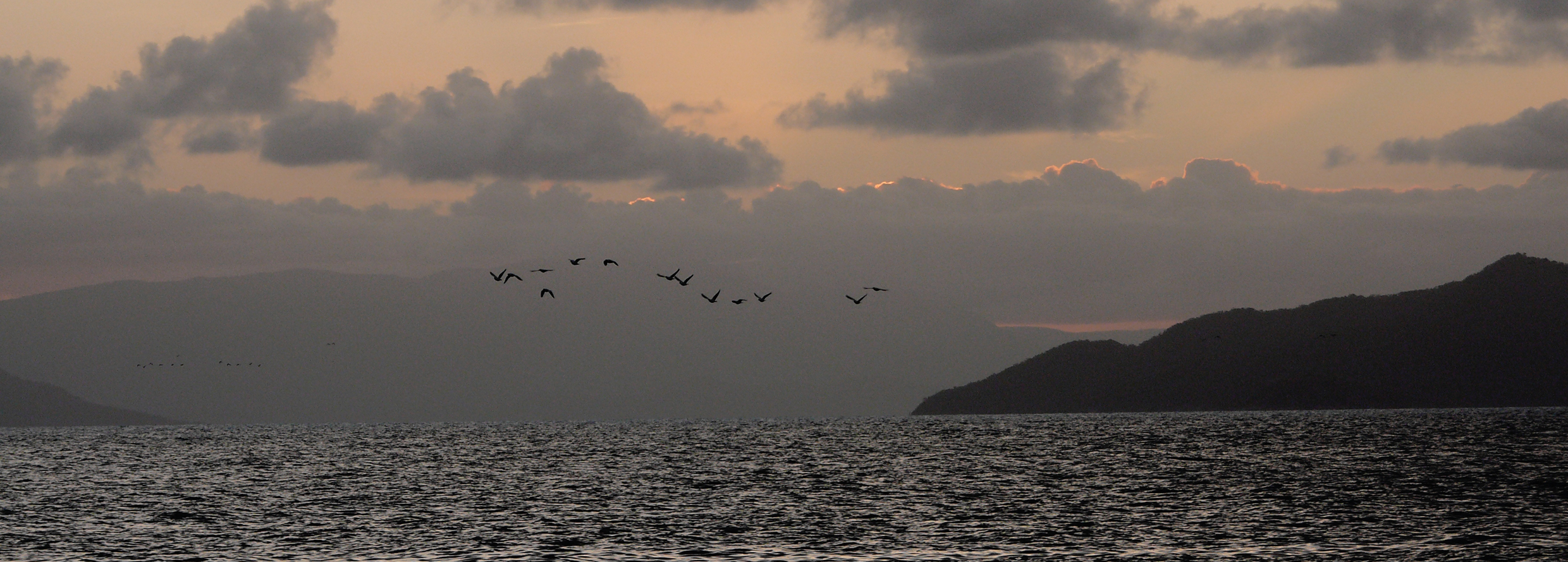
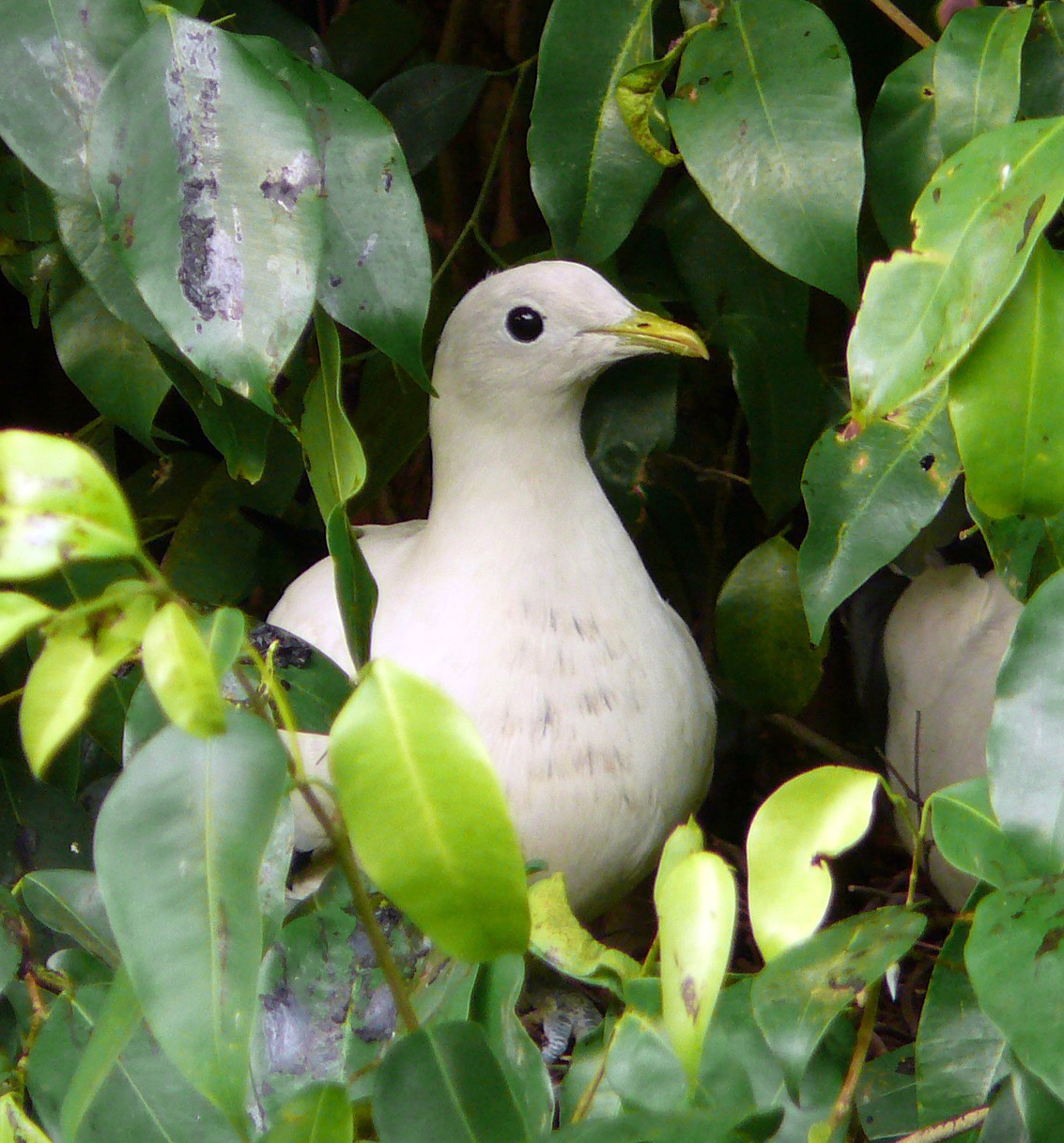
For six months each year, one Island, part of a tiny archipelago off the east coast at Cardwell, is home to a huge breeding colony of the iconic Pied Imperial Pigeons (Ducula bicolor). Every September, the birds arrive from their winter territory in New Guinea to breed on NorthBrook Island, the largest in the Brook Islands archipelago, which lies 5 nautical miles east of Hinchinbrook Island.
Arthur and Margaret Thorsborne first discovered the colony, almost by accident, on a camping holiday in 1964. Captivated by the sight of these gleaming white birds flying arrow-straight from mainland to island, the Thorsbornes returned in 1965 to conduct the first count.
The count is now in its 60th year, making it Australia’s second-longest bird-monitoring survey.
The data they, and countless volunteers have collected, tells an extraordinary story of the population rising back from near extinction to a much healthier number, although still vulnerable to habitat loss and climate change, which is increasing the frequency of extreme weather events.
Experience of the Count

Each count begins mid-afternoon, as the first flocks return to the island after the day’s feeding on the mainland. Volunteer counters are paired up (one counter, one scribe) to cover the northern and southern approaches. Counters call the numbers as each flock is in view, while scribes record these on prepared data sheets. As the afternoon progresses, the pace accelerates and intense concentration is needed to ensure an accurate count. When it is too dark to see the last few flocks, the count concludes and the boat turns towards Cardwell with its tired but happy band of counters.
The first count in 1965 recorded 4,692 birds. But the Thorsbornes’ commitment became permanent two years later, when the count dropped to just 1,451 and they learned of threats from illegal shooting and coastal forest clearing.
They ran a tenacious campaign to end the shootings (including disarming one shooting party themselves) and it was a turning point. Shooting eventually ceased, and the annual counts continued — often joined by friends and allies — tracking a slow but steady population recovery.
By the 1980s, populations were around 14,000 & the National Parks service was involved, coordinating up to five counts a year. Ranger Dave Green became a passionate advocate and a mentor for the mostly volunteer counters. Today, Girringun rangers are also closely involved.
The devastation from Cyclone Yasi in 2011 hit hard, damaging both the pigeons’ island habitat and the coastal forests they feed on. Despite a promising bounce-back, the birds have never reached pre-Yasi totals, plateauing around 23,000 after averaging around 34,000 in the first decade of this century. The reasons remain unclear and are being investigated by Dr John Winter, a veteran of fifty counting seasons.
The count is a true labour of love — for the couple who started it, those who return each year, and every first timer. As we enter the 60th season, it’s a reminder that to ensure a future for these important birds and the rainforest they help regenerate, we must keep watching — and keep counting.
Join this years count when dates are announced at www.pipwatch.net