
With the 2025 Federal Election fading into the rearview, we turn to reflect on the ripples we set into motion—and the horizon that now unfolds before us. In Far North Queensland, the electorate of Leichhardt witnessed a quiet yet powerful groundswell: a community-led, non-partisan campaign that brought climate action and nature protection to the forefront of public consciousness. The campaign aimed not to sway votes toward any political party, but to ensure that the issues of climate resilience, biodiversity, and renewable energy were top of mind as voters stepped into the ballot box. Through heartfelt conversations at doorsteps, information shared at early voting booths, and a commitment to respectful engagement, this movement became a local expression of a broader national shift: one where climate policy, or the lack thereof, is now a defining issue for many voters and where a growing portion of the electorate prioritises climate champions at the ballot box.
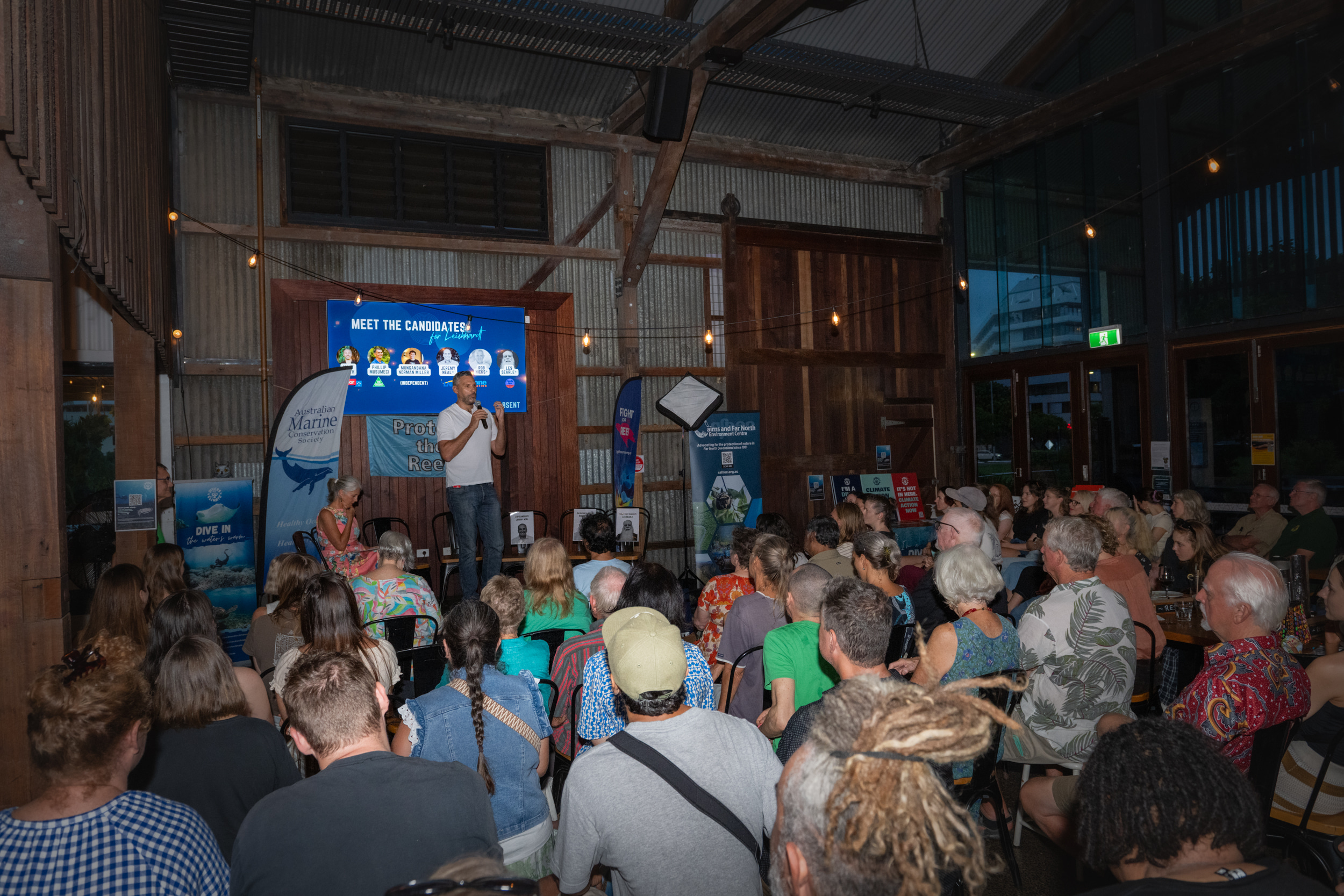
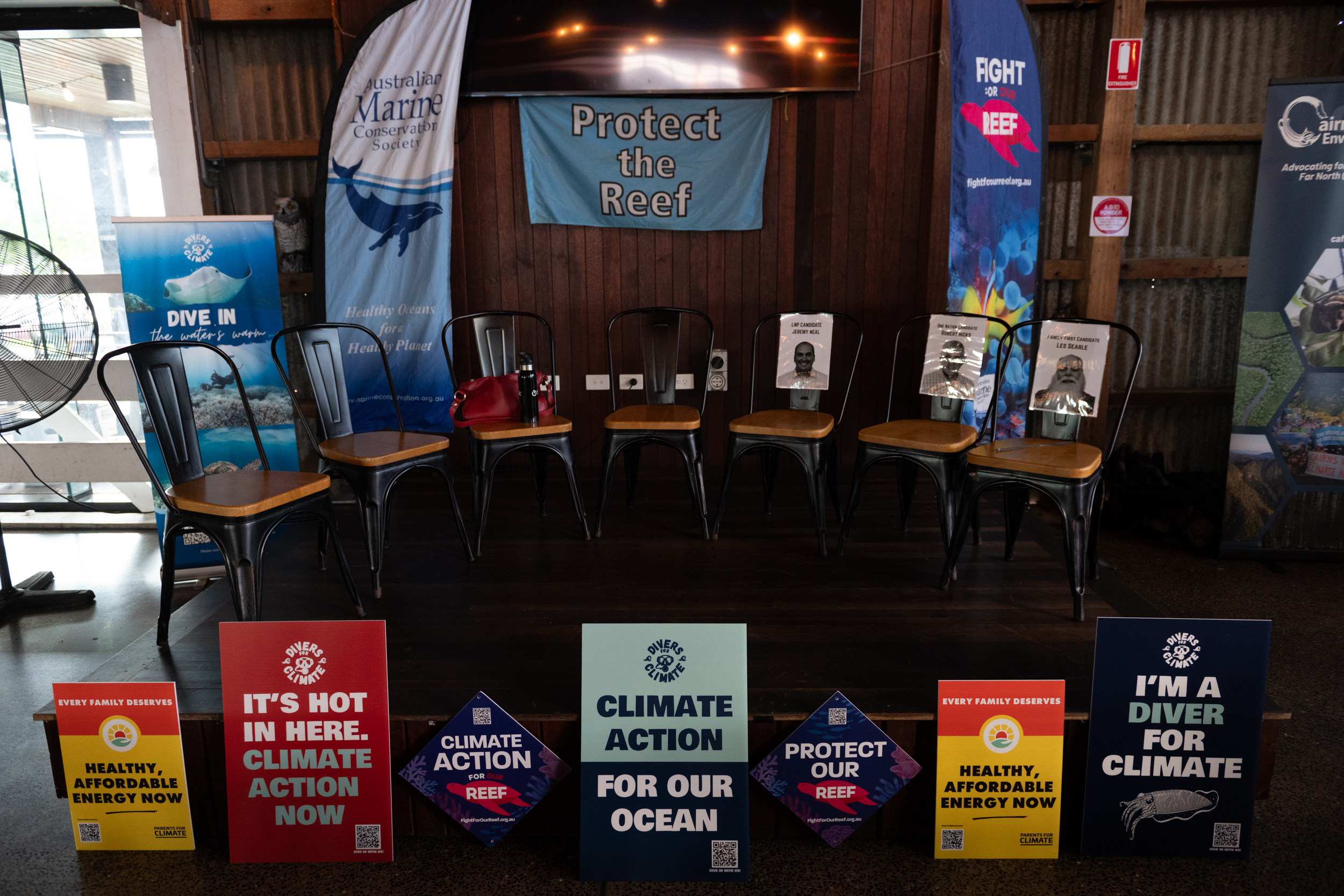
A defining moment of the campaign was the Reef, Climate and Energy Forum, co-hosted with AMCS, Divers for Climate, and the Queensland Conservation Council. This milestone event placed climate resilience and nature conservation firmly in the spotlight, offering the community a vital platform to engage directly and ask pressing questions about the future of our region. While it was disappointing that three candidates declined the opportunity to speak on their climate policies, their absence spoke volumes. Despite this, the forum was a resounding success—drawing nearly 100 attendees and securing widespread media coverage across print, radio, and television.

One of the most powerful tactics used was deep canvassing through door knocking. Over 10 weeks, volunteers knocked on 1,084 doors across six Cairns suburbs, holding 348 conversations that explored people’s views on extreme weather, renewable energy, and climate solutions. These were not scripted pitches, but genuine discussions shaped by listening and mutual respect.
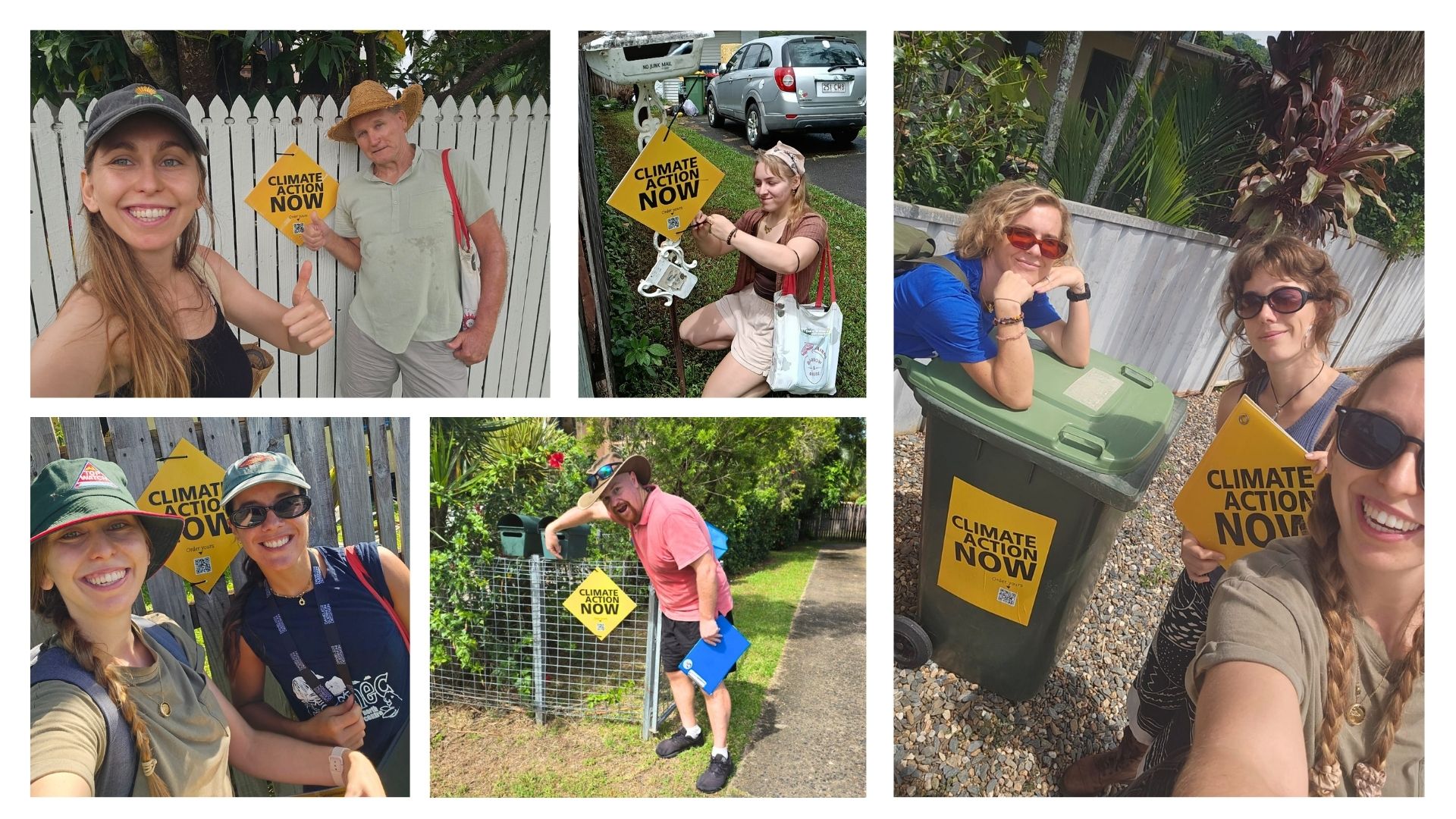
The campaign began with a volunteer launch party that attracted 30 attendees, building momentum and community spirit. Over the course of the campaign, 13 volunteers were trained in deep canvassing techniques, with the effort supported by two dedicated field campaigners. Through these efforts 110 Climate Action Now signs were put up and 67 letters to the local candidates advocating for stronger climate policies were sent. In addition, more than 1,000 flyers were distributed and letterboxed, underscoring the need for sound climate mitigation and adaptation policies from the local candidates.


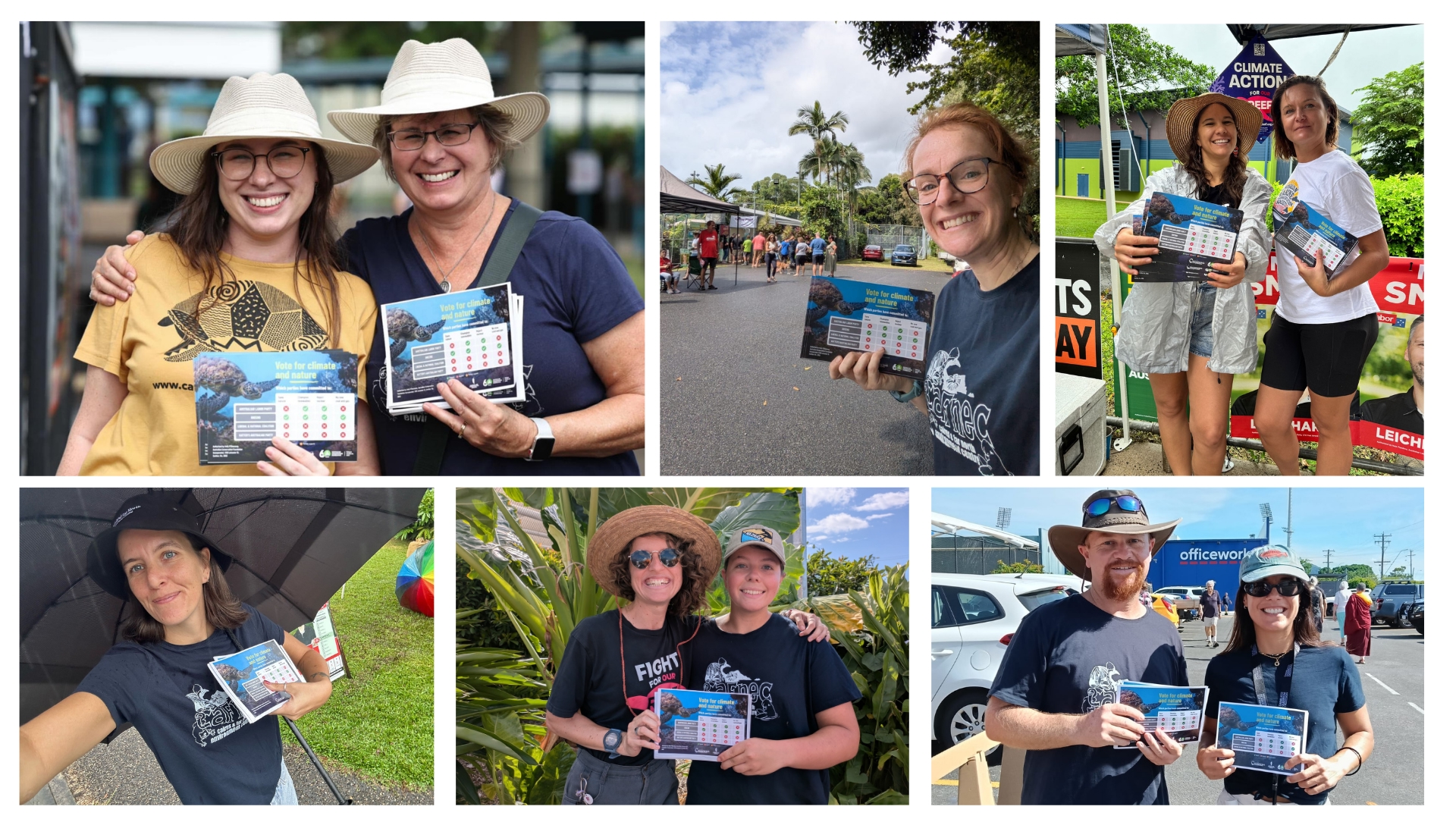
In the final stages of the campaign, CAFNEC volunteers distributed 6,000 climate and nature scorecards during the two weeks of early voting and on election day. These non-partisan materials helped voters understand where major parties stood on key environmental issues. 36 volunteers, including 6 recruited through the Senior Citizens Association, ensured that the scorecards reached a wide audience at early voting centres and polling booths across Cairns.
The results of the federal election nationally reflected a growing public demand for meaningful climate action. As reported by the ABC, voters across Australia demonstrated strong support for renewable energy over nuclear power, and many electorates—including Leichhardt—saw significant swings away from parties that have historically resisted ambitious climate policy. Looking ahead, this campaign is a powerful reminder that communities can shape the conversation and create space for policies that protect nature and people. But this is only the beginning. As Australia accelerates its shift to renewables, it is critical that new projects are well planned, sited responsibly to avoid harming natural ecosystems, and are developed with meaningful consultation with local communities and First Nations peoples. Renewable energy must deliver net-positive outcomes—not just for the climate, but for biodiversity, community wellbeing, and cultural integrity. CAFNEC’s campaign has shown that when members of the same community come together and dare to reach outside their own bubble, they can move the dial on some of the most important issues of our time.
