Looking After Daarba Country
Special Wetlands – Daarba Country
Daarba Country is special and is connected in the Cape Flattery dune systems and associated wetlands, a rare and highly sensitive coastal landscape recognised on the Australian Government’s Directory of Important Wetlands. These wetlands are not isolated features, they are part of a connected dune and groundwater system that supports unique ecosystems, including dune lakes, specialised vegetation, and habitat for a range of species that depend on clean, stable water conditions.
Their national recognition reflects their ecological importance: they are representative of tropical dune wetland systems, play a critical role in groundwater and surface water interactions, and provide refuge for wildlife in a changing and increasingly disturbed environment. For Traditional Owners, these places are also living cultural landscapes, holding deep spiritual, cultural, and environmental significance.
Despite this recognition, these wetlands remain vulnerable to cumulative impacts from mining, land clearing, and groundwater disruption. Protecting them means protecting the integrity of both ecological systems and cultural responsibilities that have sustained Daarba Country for generations.
Mitsubishi Cape Flattery Silica Mines
While mining operations at Cape Flattery are subject to environmental monitoring and rehabilitation requirements, community members and neighbouring Traditional Owners have raised ongoing concerns about the accessibility, transparency and long-term interpretation of monitoring data, particularly in relation to groundwater connectivity, wetland health and progressive rehabilitation outcomes.
Diatreme Mining Proposed Across Cape Flattery
Cape Flattery, on the eastern coast of Cape York Peninsula north of Cooktown, is home to one of the world’s largest silica sand deposits and has been mined since the 1960s. Today, the region is facing a new wave of mining expansion, with multiple large silica sand proposals either under assessment or recently withdrawn. These projects sit within and adjacent to the Country of several First Nations family groups. The area contains nationally significant coastal dune systems, wetlands, rainforest, cultural heritage places, and interconnected groundwater systems that have sustained people and ecosystems for thousands of years. As pressure for silica mining grow, driven largely by international, Cape Flattery has become a major focal point in the broader debate about cumulative impacts, cultural heritage, water, and the future of development on Cape York.
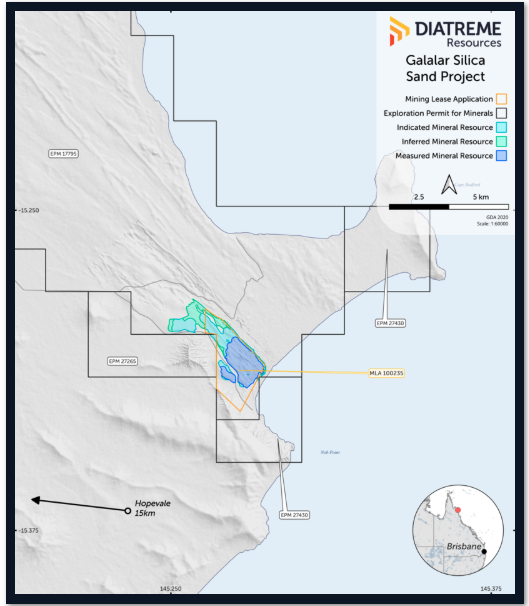
Galalar Silica Project – Withdrawn
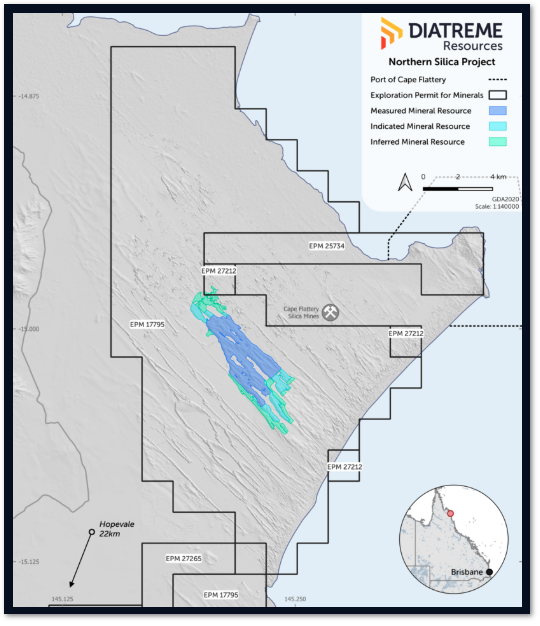
Northern Silica Project – Under Assessment
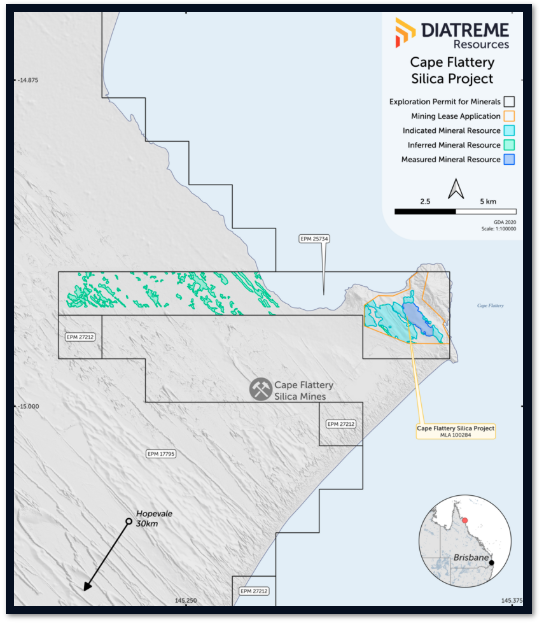
Cape Flattery Silica Project – Under Assessment
Diatreme Resources has proposed three major silica sand mining projects across the Cape Flattery region, contributing to growing industrial pressure on one of Cape York’s most environmentally and culturally significant coastal landscapes. Together, the projects would expand large-scale mining across extensive coastal dune systems that contain wetlands, groundwater systems, cultural heritage sites and habitat for threatened species.
The first proposal, the Galalar Silica Sand Project, was planned near Cape Bedford, south of the existing Cape Flattery mine and close to Hope Vale. The project proposed an open-cut silica sand mine, processing facilities and export infrastructure capable of producing nearly one million tonnes of silica sand each year. Galalar entered Queensland’s Environmental Impact Statement (EIS) process in 2020, prompting concerns about impacts on Country, water systems and cumulative industrialisation of the region. In 2023, Diatreme withdrew the proposal before completing the EIS process, although the company has indicated it may revisit the project in future.
The second proposal, the Northern Silica Project (NSP), is currently the company’s primary focus and remains under state and federal environmental assessment. Located north of Hope Vale near the existing Cape Flattery export facilities, the project proposes a large open-cut silica sand mine producing up to five million tonnes annually over approximately 25 years. The proposal includes extensive clearing, mining pits, processing infrastructure, haul roads and transport links to the Port of Cape Flattery. The scale of the project has intensified concerns about cumulative impacts on groundwater, dune ecosystems, cultural heritage and the broader industrialisation of the Cape Flattery coastline.
The third proposal, the Cape Flattery Silica Project (CFSP), sits adjacent to the long-running Mitsubishi-operated Cape Flattery mine. Acquired by Diatreme through its takeover of Metallica Minerals, the project is being developed alongside the Northern Silica Project as part of a broader regional silica mining strategy. While still progressing through feasibility and planning stages, the proposal would further expand mining across the Cape Flattery dune systems and increase long-term mining activity in the region.
Taken together, these proposals represent a major expansion of silica sand mining across Cape Flattery and surrounding Country, raising broader questions about cumulative environmental impacts, cultural heritage protection, water security and the long-term future of Cape York’s coastal landscapes.
History Of Mining at Cape Flattery
- 1967 Cape Flattery Silica Mines Pty Ltd was founded as interest in mining the area became more established.
- 1977 The Cape Flattery mine was purchased by Mitsubishi Corporation
- 1986 Hopevale Council (Not Local Govt) was formed and recieved the first Deed of Grant in Trust (DOGIT) for the area.
- 1990 Cape York Land Council established
- 1991 Juunju Daarrba Nhirrpan National Park (CYPAL) is transferred to Aboriginal freehold under the Aboriginal Land Act 1991 and jointly managed in perpetuity by the Queensland Parks and Wildlife Service (QPWS) and the relevant Aboriginal land trusts.
- 1993 Mining Leases Granted to Cape Flattery Silica Mines, formalising mining on site
- 1994 The Queensland Environmental Protection Act Introduced
- 1996 Balkanu Cape York Development Corporation formed
- 1997 Hopevale Congress of Clans formed to progress a Native Title claim on behalf of 11 Hopevale clans
- 2000
- QLD Water Act established
- Federal Environmental Protection and Biodiversity Conservation Act established
- Daarba Land Trust Formed
- 2001 Hopevale Congress Aboriginal Corporation RNTBC formally registered
- 2014 One Claim Native Title process begins
- 2015 Cape Flattery Mining Leases change under legislations changes
- 2019
- Cape York Water Plan established
- Including the Cape York Peninsula Heritage Area Reserve
- Progressive Rehabilitaion and Closure Plans made mandatory in QLD
- Cape York Water Plan established
- 2021 Diatreme announces interest in the Galalar Silica Sand Project, positioned near Cape Bedford
- Galalar Silica Project’s Pre-Feasibility Study (PFS)
- Traditional Owners connected to Cape Bedford begin a strong resistance to the Galalar Silica Project
- 2021-2023 Diatreme Resources enter the scene and begin exploration for silica resource to the North of existing mine site
- 2023
- The Galalar Silica Project Withdrawn
- The Cape Flattery Silica Sands Project by Diatreme declared a ‘Controlled Action’ under the EPBC Act.
- The Northern Silica Project proposed by Diatreme is referred as a ‘controlled action’ under the EPBC Act.
- The Cape Flatter Silica Sands project is delcared a ‘Coordinated Project’ by the Queensland Government
- 2024
- The Northern Silica Project is declared ‘Coordinated Project” by the Queensland Government
- Diatreme Resources acquired 100% ownership of the Cape Flattery Silica Project (CFSP) following a takeover of Metallica Minerals Limited (MLM)
- 2025
- Terms of Reference for the Environmental Impact Assessment prepared by Diatreme for the Northern Silica Project
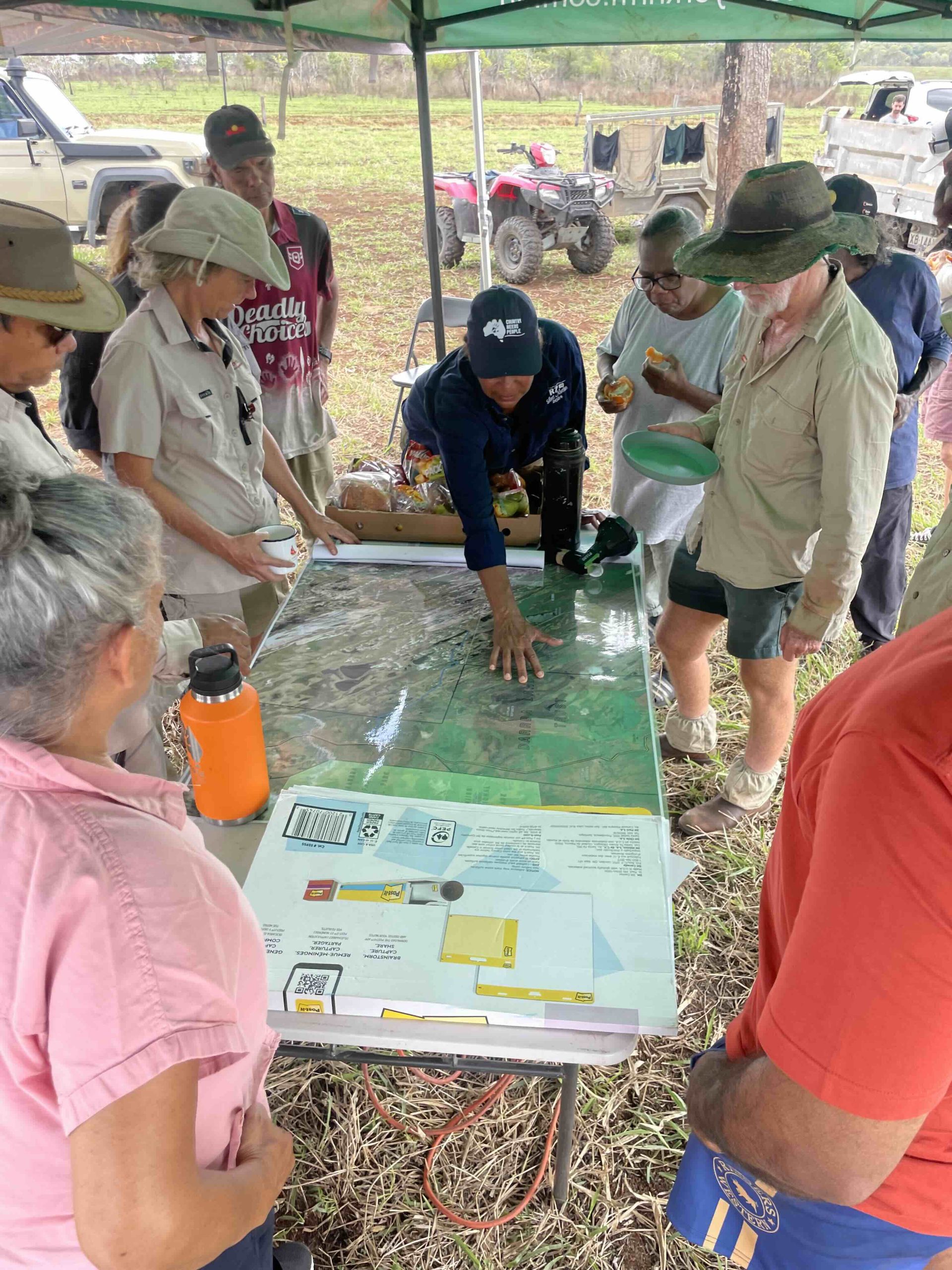
- Daarba Land Trust recieve ‘Looking After Country’ Grant and host on Country meeting and begin wetland monitoring
Cape York Water Plan
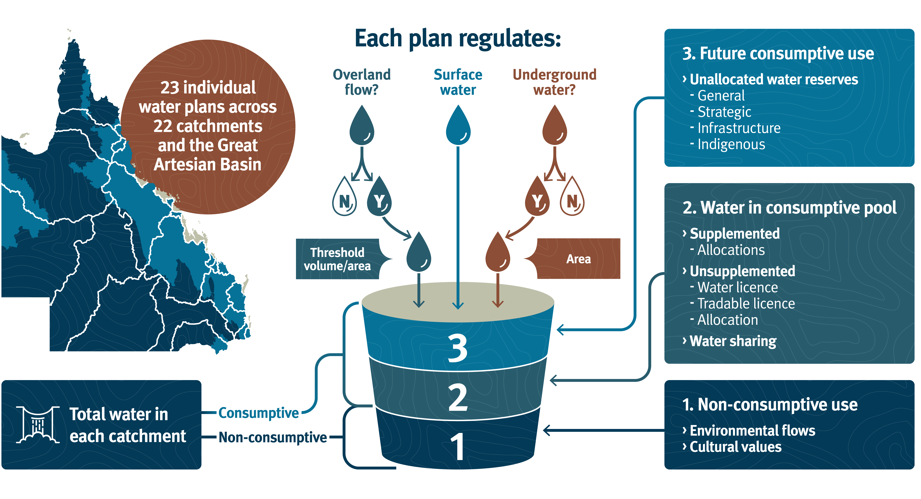
The Cape York Water Plan 2019 is one of only a few water plans in Queensland that explicitly reserves consumptive water for Aboriginal peoples through the Cape York Peninsula Heritage Area (CYPHA), aligning with First Nations water rights and self-determination.
However, uptake of this allocated water remains limited. However, this limited uptake does not necessarily translate to a lack of interest in water. A more likely scenario is that water has not been taken up due to structural barriers, including lack of capital, infrastructure, governance capacity and technical support.
Additionally, there is a critical equity gap in the Jeannie and Watson Basin because there is no allocation under the CYPHA due to prior mining allocations, leaving Traditional Owners excluded from water access from the outset.
CAFNEC believes the state government should be taking action to support eligible organisations to understand the opportunity offered by CYPHA and to resource organisations to implement governance practices required to uptake these reserves.
The CYPHA reserve across Cape York because is important as it is aligned with Indigenous rights, self-determination and the principles of UNDRIP. While supporting the uptake of available water in the CYPHA, the government should also be looking at how it can correct the specific injustice in the Jeannie and Watson Basin by creating a pathway for Indigenous water access through reallocation or transfer into the CYPHA reserve for the Jeannie and Watson Basin.